

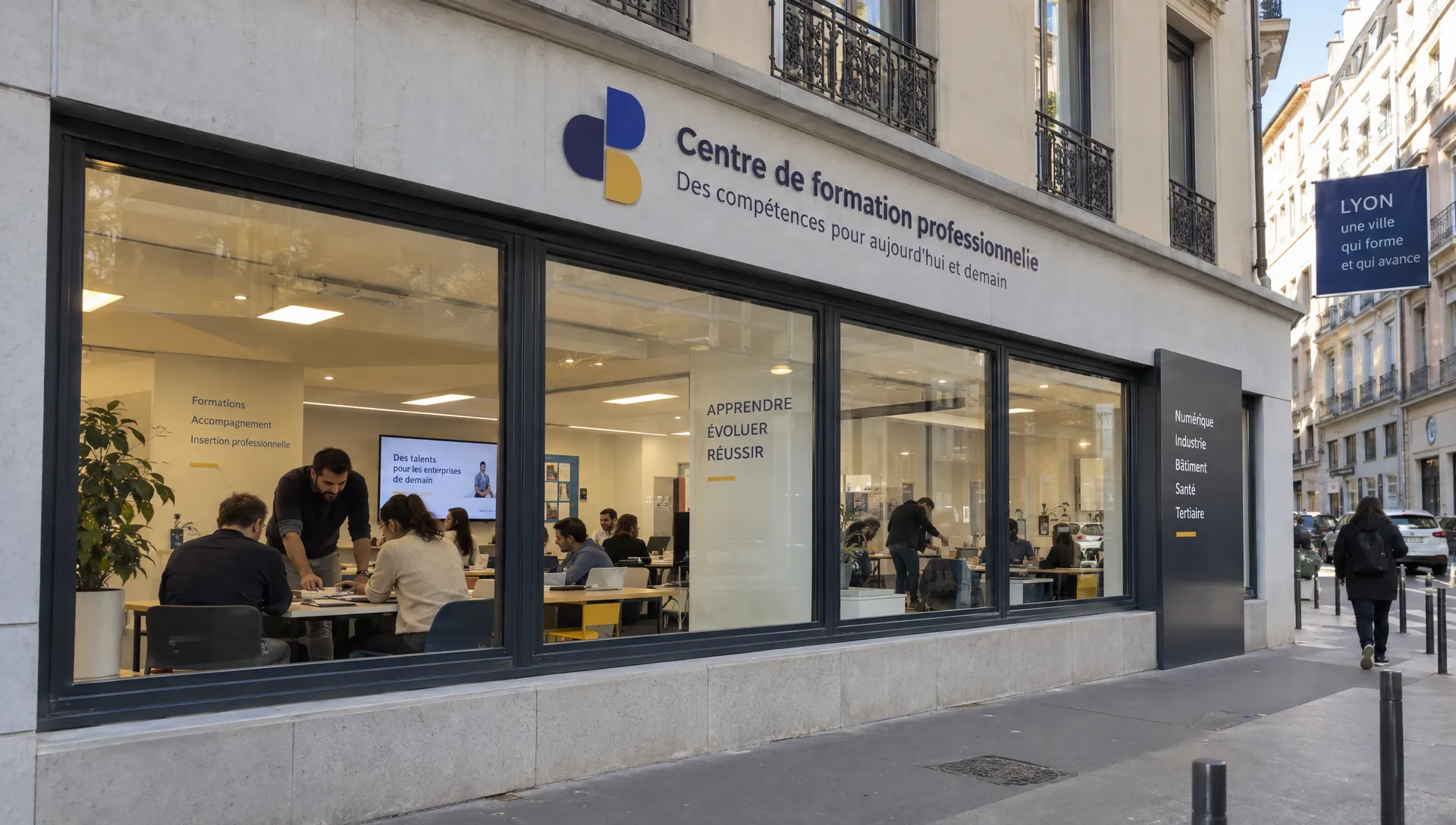
How to recruit talent in Lyon beyond degrees
In Lyon, recruiting talent should not come down to comparing schools on a CV. A degree can attest to knowledge, but it is not enough to demonstrate that a person can solve your problems, learn your trade or work with your team. To broaden your recruitment without lowering your standards, you need a different starting point: define the work expected, search across several talent pools and compare concrete evidence.
Distinguish necessary qualifications from selection habits
Before publishing a job ad, review every requirement for the role. Does the requested degree correspond to a regulatory obligation, essential knowledge or simply the background of the previous person in the role? These three situations call for different decisions.
For a regulated profession, legally required qualifications remain essential. For other roles, translate the level of education into observable abilities. “Master’s degree required” can sometimes conceal a more specific need: analysing a complex case, explaining a recommendation or coordinating several stakeholders.
Then separate what must be mastered from day one from what can be learned with realistic support. Recruitment open to unconventional backgrounds will fail if the company expects immediate independence without planning for knowledge transfer. To clarify these gaps, start by mapping your organisation’s skills, particularly those that no one can currently pass on easily.
Where can you recruit talent in Lyon beyond the usual channels?
Do not replace an education filter with just one new channel. The aim is to meet people whom your job ads and usual professional networks do not reach.
Engage the right partners for the profile you need
Depending on the role, you can contact France Travail, local employment support services, employment integration organisations or training providers in the Lyon area. The Maison Métropolitaine d’Insertion pour l’emploi may also be a useful contact to explore for your local needs. For management roles and career changes, Apec is another entry point.
Give these contacts a short brief: actual duties, essential skills, working hours, location and planned support. A request such as “we’re looking for someone motivated” is too vague to help them identify suitable candidates.
Look for relevant experience, not just identical job titles
Experience in hospitality can provide examples of priority management useful in a customer service role. Volunteer work can reveal coordination skills. These experiences offer leads to investigate, never automatic equivalents.
Do not forget internal mobility: someone already in the company may have some of the skills you need without having held the role. Present opportunities for advancement using the same explicit criteria as for external candidates.
Choose evidence suited to roles in Lyon
To recruit talent based on ability, choose an assessment that resembles the work without asking for unpaid work. The needs of a retail business, a workshop or a digital team cannot be assessed with the same exercise.
| Role type | Skill to assess | Example of a short assessment |
|---|---|---|
| Customer service | Understand a request and explain a solution | Respond to a fictional complaint |
| Logistics | Follow instructions and spot an anomaly | Analyse a simulated order preparation |
| Administrative coordination | Prioritise and ensure information is accurate | Organise several requests in a fictional case file |
| E-commerce | Diagnose a problem in the purchasing journey | Comment on anonymised or fictional metrics |
In digital commerce, the e-commerce transformation and performance optimisation services presented by Space Dinosaurs offer examples of tasks to translate into skills: improving the user experience, using metrics or making an e-commerce site more reliable.
Build the exercise around a representative problem, using fictional data. Specify its duration and what will be assessed. If you expect a lengthy deliverable or work the company can use directly, reconsider the format and consider an appropriate paid arrangement.
Make the job ad clear and the process predictable
A job ad open to candidates without degrees is not enough to recruit talent if the application form then imposes a disqualifying education requirement. Check the entire process, from advertising to screening.
In the job ad, replace abstract qualities with situations. “You can explain a procedure to an unhappy customer” is more informative than “excellent interpersonal skills”. Also state whether experience gained in another sector may be relevant.
Practical information helps candidates picture themselves in the role:
- Pay: provide a genuine range and any variable pay elements.
- Working arrangements: specify the workplace, working hours and actual remote work options.
- Learning: describe the support actually planned, without promising training that does not exist.
- Selection: outline the stages, the duration of exercises and the expected timeline.
In the Lyon area, workplace accessibility and working hours can influence a decision to apply. Provide useful information about required travel, but do not use a home address as a shortcut for judging availability.
Finally, simplify the initial application. A CV, a few relevant questions or a description of experience may be enough, depending on the role. Asking for a long cover letter, several tests and a complete application package at the same time risks deterring people before you ever meet them.
Assess mindset without selecting clones
It is reasonable to want to recruit talent that collaborates and learns. Looking for someone “like us” is much less so: this phrase can favour the same school, a way of speaking or shared interests over professional effectiveness.
Turn each behavioural expectation into observable behaviour. For collaboration, ask how the person handled a specific disagreement. For learning, explore a situation in which they had to acquire a new method. Ask follow-up questions about their actions, the difficulties they encountered and what they would do differently.
Ask all candidates the same core questions and record the answers before discussing them with other assessors. A simple scoring guide can distinguish between no example, a partial example and a convincing demonstration. It does not make judgement infallible, but it requires you to explain the decision.
You can draw on an approach to structuring a selection process to reduce bias, while keeping criteria directly related to the role.
A personality profile can inform the discussion. It should neither become a definitive label nor replace observation. In particular, confidence in an interview is not sufficient evidence of collaboration or future performance.

Safeguard selection criteria and candidate data
Recruitment without systematically filtering by degree remains subject to French rules. The French Labour Code governs, among other things, non-discrimination and the information requested from candidates. Under Article L1221-6, this information must have a direct and necessary link to the job offered or the assessment of professional abilities.
Therefore, avoid questions about family plans, religion or other matters unrelated to the role. Instead, ask about the ability to work hours that are genuinely necessary or undertake the travel required. Do not require a personal vehicle if the work does not justify it.
For CVs, test results and interview records, apply the principles set out by the CNIL: a defined purpose, relevant data, limited access and justified retention. Inform people about how their data is used and about their rights. Building a talent pool does not mean keeping every application indefinitely.
If a tool uses AI, check its screening criteria. A degree removed from the job ad may still be present in the ranking parameters. Also check exclusions and retain a genuine possibility of human review. Automation helps process applications; it does not remove the need to justify decisions.
These checks help you recruit talent using more explicit rules, without replacing a visible education filter with opaque criteria.
Test the approach in an SME
A small business does not need to overhaul all its recruitment at once. Choose a role with sufficiently clear duties and for which a manager can support onboarding. Avoid starting with a role that has no available mentor or poorly identified regulatory prerequisites.
Prepare a pilot for one role
During the first week, document the expected skills, decision criteria and a short exercise. Also decide who will respond to candidates and the response time your team can realistically commit to.
In the following weeks, advertise the role through your usual channels and a few local partners. Use a common template to compare applications. This timeline is intended to organise the launch, not to promise a hire within thirty days.
Plan knowledge transfer before making a decision
Before making a job offer, identify the tasks that will require learning, the person who will support the new hire and the follow-up check-ins. If that support is not available, adjust the profile you are seeking or the organisation of work.
To recruit talent from different backgrounds, the budget must cover time for knowledge transfer as well as the search for candidates. Otherwise, the company risks attributing to the person a failure caused by inadequate onboarding.
Measure success beyond the number of applications
A larger talent pool is only useful if it improves hiring. Track a few simple metrics with consistent definitions rather than a dashboard that is difficult to maintain.
| Metric | What it helps assess |
|---|---|
| Relevant applications by channel | A partner’s ability to present candidates who meet the criteria |
| Time to a qualified application | How quickly you reach a candidate who can genuinely be considered |
| Dropouts by stage | Possible difficulties in the candidate journey |
| Independence on defined tasks | Progress after hiring |
| Retention at six and twelve months | Continuity of employment, to be interpreted in context |
Before the person starts, define what “being independent” means for the role. For example, handling a routine request without requiring approval every time is a more useful goal than “settling in well”.
Then compare the manager’s perspective with that of the new hire. Early departures can result from a mismatch in pay expectations, misunderstood working hours or insufficient support, not just poor selection.
The goal is to recruit talent that succeeds in the actual conditions of your company. With small teams, examine situations individually: a few hires are not enough to prove that one method is superior.
Frequently asked questions
Can you hire without requiring a degree? Yes, when the profession does not require a specific qualification. However, you must check the necessary skills, any required authorisations and obligations specific to the activity. Removing a degree from the job ad does not eliminate safety requirements.
What is the simulation-based recruitment method? The MRS, implemented by France Travail, assesses abilities through exercises designed around the requirements of the role. It broadens selection beyond the CV. An exercise created independently by a company is not automatically an MRS.
How do you compare a candidate with a degree and someone changing careers? Use the same essential criteria and comparable evidence. Degrees and experience shed light on each person’s background, but the decision must explain who meets the needs of the role and what support is still needed.
Should all references to education be removed? No. You can mention useful knowledge and relevant training while accepting other evidence. The goal is to avoid unjustified automatic exclusion, not to ignore what people have learned through formal education.
Move to skills-based recruitment
To recruit talent in Lyon beyond degrees, start with one role: remove unjustified requirements, contact suitable partners and assess a representative work situation.
Koann supports matching based on skills and mindset, with candidate profiles, match scores and recruitment tracking. These tools can support your approach, provided you retain explicit criteria and a reasoned human decision.